Author: admin

  • Data for good – Bringing meaningful change to people’s lives

    For actuaries, data is their natural habitat – and when they use it to help shape reform in the social sector, it can be especially rewarding. The Actuaries Institute recently spotlighted Principal Hugh Miller’s work with the New Zealand government to investigate the long-term costs and outcomes for people in the welfare system.

    Hugh and his team’s modelling innovations offered insights for the Ministry of Social Development well beyond a four-year budget cycle – helping to inform policies and programs to improve outcomes for society’s most vulnerable.

    Creating one of the most complex models ever built in Australasia, the team gathered millions of data points on hundreds of thousands of individuals. They then forecast across the next 50 years to learn how people move through the welfare system, measuring time on welfare and applying dollar values – with a focus on person-centred design.

    “It’s exciting to work in a team of actuaries affecting real change on a large scale over the long term”

    In building the models, Hugh’s team assisted decision makers to isolate changes in unemployment and attribute these to government policy and operational changes. This means interventions can be better targeted to make a real difference, such as youth coaching to support young people into education and employment.

    Additionally, in using a model structure that can iterate and grow, the evidence base grows continuously around understanding disadvantage and how to reduce it.

    Analysing and modelling data with a human approach and a goal to improve the lives of people over generations is just one example of how actuaries are using data for good. Hugh says, “It’s exciting to work in a team of actuaries affecting real change on a large scale over the long term.”

    Head to Actuaries Digital to find out more.

  • The path to suicide prevention

    Care of people who may be suicidal can literally make the difference between life and death. Taylor Fry’s recent review for the NSW Agency for Clinical Innovation looked at the evidence for several aspects of suicide prevention care, and will help inform government towards setting standards of care for people at risk.

    View Taylor Fry’s report in full

    Nine Australians die every day by suicide – that’s more than 3,000 people a year. For each death by suicide, it’s estimated more than 30 suicide attempts are made. Suicides and suicide attempts have long-lasting impacts on families, friends, colleagues, communities and societies.

    Suicide is preventable but complex

    It’s now recognised that suicides are preventable and there are measures organisations, society and individuals can take to prevent suicides and suicide attempts. Yet despite all we know, suicide prevention remains complicated, partly because the factors leading to suicide are complex and varied. A recent initiative by the UK charity Campaign Against Living Miserably, for example, shares the last photos ever taken of people who took their own lives, smiling for the camera as if nothing is wrong.

    Prevention is complicated partly because the factors leading to suicide are complex and varied

    In Taylor Fry’s rapid review for the NSW Agency for Clinical Innovation, we looked at a range of research and evaluation evidence on suicide prevention programs in Australia and around the world. This will assist the government in making decisions on policy standards that support the identification, assessment and management of people who may be suicidal in all care settings in NSW.

    What the evidence tells us

    While the review found robust research and evaluations on some practices, we found a critical need for more rigorous sources of evidence in certain areas of suicide prevention.

    Shift towards universal suicide care

    One key finding is a paradigm shift towards universal suicide care within the Australian health system. Historically, approaches to suicide prevention have focused on the treatment of mental illness. Universal approaches involve responding to whole populations – including those who are suicidal but not presenting with mental illness. These people may be experiencing distress or crisis from issues such as alcohol or other drug problems, unemployment or loss of a loved one.

    “… aftercare is key to reducing future attempts and deaths”

    This shift towards universal suicide care has led to clinicians and other staff caring for a broader range of people and in greater numbers, particularly given recent spikes in presentations of people with a mental health crisis linked to natural disasters and COVID.

    As a result, some are arguing for more resources to deliver universal evidence-based suicide care.

    Emphasis on person-centred aftercare

    A prior suicide attempt is the single largest risk factor for subsequent death by suicide. The risk of a reattempt remains very high for at least the days, weeks and months following a suicide. That’s why aftercare is key to reducing future attempts and deaths. Many people – including the chair of Beyond Blue and former prime minister Julia Gillard – are advocating for increased access to suicide aftercare.

    But not all aftercare services are effective. For example, brief contact by text or letters is not effective alone. Person-centred, clinically integrated care consistently appears as an element of successful care after self-harm or a suicide attempt. Person-centred care emphasises treating people with dignity, compassion, and respect, and providing coordinated care and support. Establishing trust and connection is also important.

    Person-centred, clinically integrated care consistently appears as an element of successful care

    The evidence suggests providers could aim to follow up and connect people to aftercare as soon as reasonably possible following discharge, and to consider how to prioritise those who require more assertive follow-up. To understand specifically what works best – for example, the most effective timing and method of aftercare – more research and evaluations are needed to ensure services are effective.

    Need for tailored care for the most at-risk groups

    There is a stark gap in evidence of best practice care for priority groups. This gap points to a need for more rigorous evaluations of suicide care pathways and how they can be adapted for different priority populations. The review offers several considerations for tailoring care for people who may be suicidal, especially young people, older people, LGBTIQ+ people, and Aboriginal and Torres Strait Island people. Many people belong to one or more groups, which adds extra layers of need for bespoke care.

    Navigating the challenges

    Our review identifies a need for robust evidence in critical areas of suicide prevention care. Highlighting these gaps and exploring broad patterns of consistency in care treatments and outcomes are a first step towards building a strong evidence base. Suicide is preventable and this evidence will help improve understanding of the best way to care for someone who may be suicidal, moving the dial closer towards zero suicides.

    “The review offers several considerations for tailoring care for … young people, older people, LGBTIQ+ people, and Aboriginal and Torres Strait Island people”

    The Care of people who may be suicidal rapid review is part of our broader focus on mental health. This includes contributing to evaluations of suicide prevention initiatives in NSW and Victoria, and using linked data to understand the pathways of people who may be suicidal through Australia’s health system.

    Here’s a selection of other articles you may like to read on our work across the social sector:

    Pathways to homelessness offers insights for government

    The role of data in disrupting disadvantage

    Australian Actuaries Intergenerational Equity Index update

    If you need someone to talk to, call:

    • Lifeline on 13 11 14
    • Kids Helpline on 1800 551 800
    • MensLine Australia on 1300 789 978
    • Suicide Call Back Service on 1300 659 467
    • Beyond Blue on 1300 22 46 36
  • What’s new in the Privacy Act review and what it may mean in practice

    In this follow-up to our two-part series on privacy in the age of big data, we explore the latest developments in the Australian Government’s ongoing review of the Privacy Act 1988, and how the most recent updates to proposed changes may impact people and organisations.

    In its aim to ‘ensure privacy settings empower consumers, protect their data and best serve the Australian economy’, the Government recently released a discussion paper as part of its Privacy Act review. The paper puts forward further reform options and refinements, including to three changes we outlined in Part 1 of our series for how they may impact machine learning models, the industries who use them and the consumers they target. These proposed changes are:

    • Expanding the definition of personal information
    • Strengthening consent requirements
    • Introducing and applying a person’s ‘right to erasure’ of their personal information.

    Importantly, the Privacy Act review is occurring alongside the Online Privacy Bill, a binding code for social media and other online platforms, which will also increase penalties and enhance enforcement measures. Additionally, changes identified as more urgent will be prioritised and implemented through this new Bill.

    This broader scope will increase the compliance burden for organisations

    We now take look at the updates to the three main proposed changes we covered earlier, together with some new options for reform, and how all of these may affect businesses if implemented.

    Getting personal – the definition of ‘personal information’

    What we highlighted previously

    A proposed change to expand the definition of personal information to include technical data and ‘inferred’ data, representing a fundamental expansion in what organisations might think of as personal information. The consequences for machine learning model regulation is potentially hugely significant for consumers and organisations, if models and their outputs are ensnared in restrictive governance requirements.

    What’s happening now

    Following positive support from public submissions, the latest set of proposals in the discussion paper still includes amending the definition of personal information to make it clearer that it includes technical and inferred information.

    Reducing uncertainty

    In addition, the paper has also proposed to refine the definition wording further by replacing ‘about’ with ‘relates to’ in the context of an identified individual’s information. This proposed change is designed to reduce uncertainty and capture a broader range of technical information from which a person could be identified, even if the information is primarily about something else – such as the person’s telecommunications use.

    Increased compliance burden

    This broader scope will increase the compliance burden for organisations as a higher volume of information may now be subject to more rights and obligations than previously. At this stage, the potential consequences for machine learning model regulation remain to be seen and will hinge on whether the definition of inferred data extends in practice to model outputs, and even models themselves.

    Saying ‘I do’ – strengthening consent requirements

    What we highlighted previously

    The strengthening of consent requirements through pro-consumer defaults may lead to consent fatigue for consumers and potentially limit the data available to organisations for future training of machine learning models.

    What’s happening now

    In response to concerns raised in public feedback related to pro-consumer defaults, the Government has proposed an alternative second option, which requires easily accessible privacy settings that provide individuals with an obvious and clear way to set all privacy controls to the most restrictive, such as through a single-click mechanism.

    Pro-privacy default settings – a less restrictive option

    It’s plausible that a less stringent alternative will be adopted, with the possibility of requiring pro-privacy default settings only under certain circumstances, such as if the personal information is sensitive or about a child. In this case, we expect the potential consequences for machine learning models, such as limited data and misleading model insights, to be of less material concern.

    An alternative second option requires easily accessible privacy settings [for consumers]

    Consent for children and vulnerable people

    Although the mandatory pro-privacy defaults may not go ahead, strengthening of consent requirements for children and vulnerable individuals is proposed to be implemented through the binding code introduced by the Online Privacy Bill. Under this legislation, parental consent will be explicitly required for data related to children under the age of 16, and the collection or use must be reasonable and ‘have the best interests of the child as the primary consideration’. For organisations working for or in the public sector, this may result in increased compliance cost for analytics and machine learning models involving children or vulnerable individuals.

    Not partnered for life – right to erasure of data

    What we highlighted previously

    The introduction and extension of the application of a ‘right to erasure’ to machine learning models would be a very tall order for organisations, with the cost and time required to comply with erasure requests rapidly outweighing the benefits of using a machine learning model at all.

    What’s happening now

    To address the challenges raised in public submissions, the Government has amended its proposal by introducing the right to erasure only under a limited set of circumstances.

    Under the latest proposal set out in the discussion paper, individuals may request erasure of personal information only where one of the following grounds applies:

    • The personal information must be destroyed or de-identified as it is no longer required for business purposes
    • The personal information is sensitive
    • The individual has successfully objected to personal information handling through the ‘right to object’ (a new proposal, which we discuss later in our section on marketing)
    • The personal information has been collected, used or disclosed unlawfully
    • The entity is required by Australian law or a court order to destroy the information
    • The personal information relates to a child.

    Should a person’s right to erasure be further limited?

    In practice, the situations under which a person could utilise their right to erasure may be limited even further, as the Government proposes to provide for exceptions to the above, such as in instances where personal information is required for a contract or where erasure would be technically impractical and constitute an unreasonable burden.

    The Government is now considering industry feedback submissions on what exceptions should apply to address the concerns raised about freedom of speech, challenges during law enforcement and practical difficulties for industry.

    It seems likely the legislation will be tightened most significantly for targeted advertising

    Nevertheless, a question remains: how will the right to erasure apply to machine learning models and what will ‘unreasonable’ mean in practice? An important part of this question is whether the right to erasure will extend to the ‘unlearning’ techniques discussed in Part 2 of our series.

    Some new options – a crackdown on marketing

    On the other hand, it appears the Government is largely supportive of giving individuals more control of how their data is collected and used for direct marketing and targeted advertising.

    The right to object

    One of the latest proposed changes, put forward in the discussion paper, is the introduction of the ‘right to object’, which gives a person an unqualified right to object to any collection, use or disclosure of personal information by an organisation for the purpose of direct marketing (see page 133 of the discussion paper). Upon successful objection, the person will also be able to exercise their ‘right to erasure’. It appears the Government’s focus is marketing, with these requirements to be included in the code of the Online Privacy Bill to immediately address the current gap in legislation.

    Protections tightening around the world

    This tightening of protections aimed at direct targeted advertising is mirrored in global legislative changes. Europe’s General Data Protection Regulation, or GDPR, already specifies the absolute right to reject processing of data for the purposes of direct marketing. Similarly, the US is introducing a new Filter Bubble Transparency Act, which will require internet platforms to allow users to easily switch to using a version of their platform that does not include any ‘opaque algorithms’ (algorithms that alter what the user sees based on their user-specific data).

    Should Australia join in?

    The implementation of similar objection rights to direct marketing in Australia would require firms to establish processes to exclude a person from their marketing or profiling algorithms. The Government is considering further industry feedback submitted on whether this right to object should extend to include data where the personal information is collected and used in aggregated cohorts instead of individuals, and whether loyalty schemes, which offer customers tangible benefits, should be regulated differently.

    Where the privacy journey is headed

    Although the discussion paper doesn’t resolve all the issues around the implications for machine learning we raised in Part 1 of our Privacy Act series, it does give some stronger hints about the direction of the amended Privacy Act. At this stage, it seems likely the legislation will be tightened most significantly for targeted advertising, but it is unclear whether predictive model outputs will be included in the ambit of ‘inferred data’, the consequences of which will be significant for organisations.

    For now, organisations can continue to take practical steps, as we outlined in Part 1, to assess and reduce potential privacy implications for their machine learning models and pipelines. This will highlight the potential exposure to and impact from potential changes and ensure they are better prepared, whatever the final outcome of the Privacy Act review.

  • Ambulance delays – why ‘more paramedics’ is only a short-term fix

    The pandemic has highlighted chronic health system challenges, including ‘ramping’ – the often long wait in transferring patients from paramedics to emergency departments. With her unique perspective as an actuary and paramedic, Sophie Dyson explains how a system-wide approach is needed to find lasting solutions to ambulance delays.

    While I was working as a paramedic in Sydney last month, a man pulled up next to our parked ambulance and asked, if he went home and called Triple Zero, could an ambulance take him to a particular hospital his doctor had instructed him to go to. I wondered why he couldn’t simply continue driving to his destination. He explained he wanted to call an ambulance because parking at the hospital was difficult.

    At a time when demand for ambulances is at an all-time high, this behaviour is frustrating. Ambulance ‘ramping’ was a central issue to the recent Labor victory in South Australia, but ambulance workload and response performance is a perennial story that pre-dates the pandemic.

    “Paramedics unable to respond to emergencies … or callers unable to get through to Triple Zero … are indicators that something is wrong”

    Paramedics unable to respond to emergencies because they’re waiting at hospital, or callers unable to get through to Triple Zero operators because of high demand, are visible and emotive indicators that something is wrong. Increasing ambulance capacity is only a short-term fix. Ambulance services are an integral part of the health system, and a system approach is needed to find a solution.

    Ramping – a system problem

    Ambulance ramping refers to paramedics being delayed in handing over care of their patients to the emergency department (ED). On arrival at ED, paramedics take patients into the ambulance bay to be triaged by the ED nurse. If there is no ED bed or treatment chair available and the patient cannot safely be transferred to the waiting room, paramedics must wait with their patient, making them unavailable to respond to other emergencies. The consequent reduction in ambulance response capacity lengthens response times.

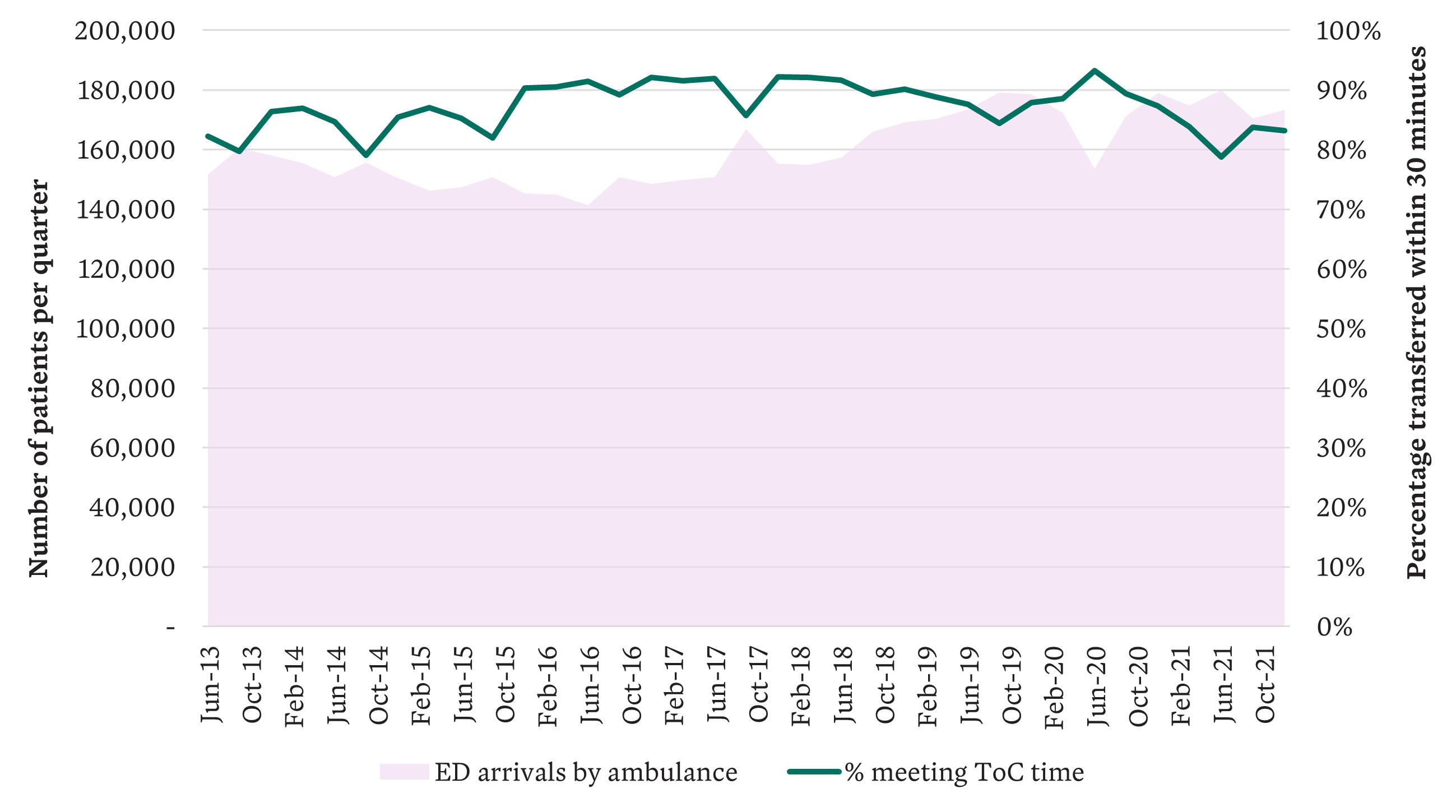
    Target times for transfer of care (ToC) from paramedics to EDs vary between states. In NSW, the target is 90% within 30 minutes, but during busy periods, ToC times can extend to several hours. As you would expect, as ED workloads rise, the proportion of patients transferred from paramedic to ED care within the target ToC time falls. The following graph shows the number of patients brought to EDs in NSW by ambulance between 2013 and 2021 compared with the proportion of patients meeting the ToC target.

    Ambulance arrivals vs % of patients meeting ToC target (NSW), which can extend several hours

    The relationship between ambulance workload and response performance is also clear in this next graph. Each state determines its own response priorities. In NSW, for example, the most urgent category is Priority 1A (P1A), all Priority 1 (P1) incidents get a lights and sirens response, and Priority 2 (P2) represents lower urgency incidents. The deterioration in response performance as ambulance workload increases is seen most dramatically in P2 median response times, as the ability to reassign vehicles to higher priority incidents has a protective effect on P1 and P1A response performance.

    Ambulance responses vs response times by priority (NSW) – a dramatic deterioration in P2

    Why are ambulance delays a system problem? Almost nine million people a year present to Australian EDs. Paramedics are delayed transferring patients from ambulance to ED because EDs are full, from the 25% of patients brought in by ambulance and the 75% who arrive by other means. EDs can’t free up beds until patients are treated and discharged from ED, or transferred to a hospital ward (Australia-wide, a little more than 30% of ED presentations are admitted to hospital). The barrier to transferring patients from ED to wards is that the wards are full, and the barriers to discharging patients from wards include waiting for aged care or disability services, or patient transport. Downstream capacity and patient flow are the system issues here.

    Financial incentives and convenience driving ambulance delays

    System interrelationships exist on the demand side too, with evidence of overlapping needs in demand for ambulances, ED treatment and the 38,000 GPs providing primary care in the community. Government data shows that across all Australian jurisdictions, ambulance services responded to three million Triple Zero incidents in 2020-21, of which 50% did not require an emergency (lights and sirens) response and 25% of patients were able to be treated and left at home, referred to their GP or another healthcare provider. In EDs, one-third of patients were deemed ‘potentially avoidable GP-type presentations’.

    This situation is driven by financial incentives and convenience. For example, although ambulance services are not funded by Medicare, for most patients – those with pension cards, private health insurance or an ambulance membership – ambulance care is free at the point of care and there are no financial consequences for calling Triple Zero. The cost, almost $1,100 per incident, falls largely on state governments. For low-acuity incidents, that’s a lot to pay for reassurance and a couple of paracetamol.

    “In 2020-21 … one-third of [emergency department] patients were deemed ‘potentially avoidable GP-type presentations’ ”

    Ambulance services recognise the issue of ambulance/ED/primary care substitution and the market failure this represents. Several services have developed initiatives to address the high cost of dispatching an ambulance to low-acuity calls while at the same time providing more clinically-appropriate care – these initiatives include virtual care programs that provide telephone advice and referrals to other providers. The cost of providing virtual care, even with an ultimate referral to a private medical provider, is less than half that of sending an ambulance. Heightened demand during COVID-19 has resulted in an expansion of these services. From an ambulance perspective, they demonstrate an entirely rational response. However, from a whole-of-system perspective, the cost to government is still several multiples of what would be paid via Medicare for a telehealth consultation with a GP.

    Where can we look for a solution?

    The pandemic has been a time of innovation in healthcare delivery. Telehealth, originally introduced to support service provision in rural areas, has become the default method for talking to our family doctor. Smartphone apps record COVID-19 patients’ vital signs and detect early indicators of deterioration. Algorithms predict the COVID-19 patients most at risk of hospitalisation and target patient monitoring resources more effectively.

    With light at the end of the COVID-19 tunnel, we need to sustain the spirit of innovation and action to develop longer-term solutions to ambulance ramping (and other health-system problems while we’re at it). To do this, both demand and supply issues need to be tackled, as well as improving patient flow and care coordination.

    “Demand and supply issues need to be tackled, as well as improving patient flow and care coordination”

    Australia’s health system delivers an enviable level of care, but overlapping state and Commonwealth responsibilities have always created opportunities for blame- and cost-shifting. The rapid introduction of certain COVID-19 initiatives has exacerbated this situation, with similar services accessible through different pathways and a blurring of health-service responsibilities.

    Navigating a whole-of-system approach

    When developing future solutions, we need to remove duplication and substitution, consider solutions through a whole-of-system lens rather than from the perspective of a single provider, and recognise the financial and other incentives that drive healthcare demand and supply.

    Back to the driver who wanted to call Triple Zero to overcome the inconvenience of parking. Consider the financial impact of lost revenue if hospital parking for ED attendances was subsidised, compared with the savings from reducing the unnecessary dispatch of ambulances. How could these savings be applied to expand service delivery and provide more appropriate clinical care?

    Next time ambulance ramping is in the news, don’t think ‘we need more paramedics’ (though that’s always a welcome thought) to solve ambulance delays, think ‘we need to capitalise on COVID-19 ingenuity, develop sustainable solutions addressing both demand and supply, and take a whole-of-system view that recognises financial and other incentives’.  Even though it doesn’t make a catchy soundbite.

  • International Women’s Day – STEMming the gaps

    As we look forward to a gender-equal world on International Women’s Day and the actions we can all take to make it happen, Taylor Fry Director Ramona Meyricke shares a few of her experiences in STEM and discusses policy’s critical role, how culture injects complexity, and the virtue of seeing value in all the right places.

    How did you come to study STEM subjects?

    Although my parents were both English teachers, I always really liked maths! I love how maths and statistics can help solve so many problems in so many fields. For instance, health statistics help to identify and improve health treatments, mathematical modelling is used to quantify costs and benefits of government services, and you can apply maths in all areas of science to achieve better discoveries. Statistics are also a big part of psychology, enabling experiments and inference to increase understanding of how people think.

    When you think of International Women’s Day, what words of wisdom have had the most impact on you?

    Whenever I think about gender equality, I’m reminded of the imagery of Mao’s words “women hold up half the sky”. It makes so much sense to include women – who make up a little more than half the population – in creating change. Why would you leave half the population behind? I also like the quote from American physicist Rosalyn Yalow, who said, “The world cannot afford the loss of the talents of half of its people if we are to solve the many problems which beset us.”

    As your career has progressed, how has your view of equality in the workplace been shaped?

    During the period of having very young children, I became more aware of all the economic incentives for women to take time off and take more of the burden in parenting. Between the cost of childcare and income tax, I would have taken home very little extra pay for working full time rather than part time.

    “It makes so much sense to include women in creating change. Why would you leave half the population behind?”

    What are the main achievements and areas of concern for women in the workplace?

    Representation is definitely ticking up in most large organisations, but the issues for women in the workplace remain real. Over the past 20 years, there has been improvement, but it’s only marginal. Two areas of concern are closing the gender pay gap and equitable parental leave and childcare arrangements.

    Can you explain the extent of the gender pay gap?

    When we prepared the Actuaries Intergenerational Equity Index, we looked at the gender pay gap.  As recorded by the Australian Bureau of Statistics Average Weekly Earnings, females earned on average 13.6 per cent less than males in 2000, and 12.7 per cent less than males in 2019 – a fairly incremental change in almost 20 years. Importantly, the pay gap isn’t a measure of whether women earn less than men for the same job – rather, it’s an indicator of women’s overall position in the workforce, representing how they and their work are valued on average. And the pay gap is linked to childbearing and motherhood, not just gender.

    It’s a challenging problem to fix, but policy and structural settings have a role to play in helping to equalise the playing field.

    How can policy settings help?

    A paper by the Grattan Institute reflects Australia’s more punitive approach to policy in this area. The paper shows how a combination of tax, welfare settings, and childcare costs means women are often working their fourth or fifth day for no extra pay. That money after tax is equivalent to what they’re paying in childcare. Unsurprisingly, they don’t do it, which is the right decision in the short term but sets them back in the long term.

    Policy changes such as paying women super when they’re on maternity leave and making childcare costs less punitive could certainly help close the pay gap, but finding solutions is more complex than this.

    “Over the past 20 years, there has been improvement, but it’s only marginal … Why do we have aged-care workers earning less on average than people who work at Bunnings?”

    What role do social and cultural factors play?

    Even when progressive policy settings are in place, for example in the EU where childcare can be free, we’re still seeing women voluntarily elect to reduce their working hours to take on more parenting responsibilities, which is the main cause of labour market inactivity and low female employment rates in Europe. Embedded social and cultural factors are so much harder to change.

    On top of this, women tend to work in occupations with lower average wages than men. Teaching, nursing and aged care, for example, are industries predominated by women. In the past year alone in Australia, we’ve seen teachers and nurses striking because of their pay and work conditions when we’ve never needed these professions more.

    Ultimately, no one should be penalised, regardless of how they choose to live their lives in terms of family setup and arrangements and whether or not they have children.

    How do we address these embedded issues?

    Confronting these realities, especially on International Women’s Day, means discussing difficult questions – why are some occupations less valued and remunerated than others? Someone has to look after old people and sick people and teach children. Why do we have aged-care workers earning less on average than people who work at Bunnings?

    This suggests we have a systemic problem in Australia and amplifies the importance of getting policy and structural settings right, including wage protection, and incentives for training and bringing the best people irrespective of gender into teaching and healthcare, and having parental leave and childcare policies that support mothers’ continued economic participation.

    How important is it to you and others to advocate for women in this industry?

    I mentor a lot of women and that’s very important to me, especially in exchanging shared experiences – which aren’t necessarily gender related!

    More broadly, achieving diversity and fairness in workplaces is a shared responsibility. Everyone, every day has opportunities to seek a diverse range of views and inputs into their work, or to build diverse teams, boards or panels – not just on International Women’s Day. A part of this is also reflecting on whether you achieved better outcomes through the diversity. In most cases, the answer would be yes.

    For instance, I remember attending a working group meeting on International Women’s Day a few years ago discussing gender equality in superannuation and out of 10 people, I was the only woman. Ironically, I had to leave early because I was pregnant and had to get to an appointment!

    “Everyone, every day has opportunities to seek a diverse range of views and inputs into their work, or to build diverse teams, boards or panels.”

    As more women join STEM professions, will their involvement change outcomes for community?

    On the theme of diversity, fairness and richness of thought, I’m hopeful that a more diverse workforce results in more considered views from multiple perspectives. I’ve worked on all-women teams and teams where I’m the only woman and the most helpful qualities are open-mindedness and respect, which seems to be more about the person rather than the gender, in my experience.

    Do you think there’s a role for quotas?

    I’d prefer a society where we reach our goals without them to avoid the accusations of tokenism and bitterness from both sides, but I can see the argument for their use. When we look to history for positive evidence, apartheid is an example where race-based quotas were introduced for a period in South Africa to help reverse the systemic disadvantage. So perhaps for a time, you need to tick boxes to adjust the status quo, and then the path follows naturally from there.

    Has anything surprised you in your career so far in working with men or women?

    I initially thought women mentors would be better for me, but over time I lost that idea. I’ve had equally great men and women mentors.

    What’s a lesson you’d like to share?

    I’ve had some excellent advice over the years, especially “learn to pace yourself”. Life is for the long haul –  it’s a marathon not a sprint – so even when you’re going through tough patches, know these will pass with easier times round the corner. Above all, make sure you enjoy whatever you choose to do because you’ll be doing it for a long time!

    Ramona uses data, analytics and actuarial modelling to help improve government, health and disability systems and services, with a particular focus on climate risk. Find out more about her work here

  • The pandemic – a big win for primary data collection and dashboarding, a loss for AI

    In this edition of Normal Deviance, Hugh Miller looks at some of the literature around the use of Artificial Intelligence (AI) during the COVID-19 pandemic and reflects on some of the challenges in creating useful AI tools.

    The pandemic has brought many issues into sharp focus. One is the public benefit of good data collection and dissemination – what would be termed ‘business intelligence’ in the corporate world. Worldwide resources such as the Johns Hopkins Coronavirus Resource Centre and the Our World in Data coronavirus hub have allowed people to explore up-to-date information and understand how the pandemic is evolving through various peaks and troughs. Most national governments have similarly invested in data collection and reporting. In Australia, the Commonwealth and State governments publish large amounts of detailed information, often daily. This facilitates the research of others too; for instance, much of the more advanced epidemiological modelling relies on this data as a starting point.

    Similarly, the value of good epidemiological modelling has been proven. In Australian organisations such as the Doherty Institute and Burnet Institute have provided advice to government that has directly fed into decisions on the nature and durations of restrictions used to manage the pandemic.

    With these successes, it is natural to ask if the high-tech frontier of data science, AI and machine learning, have played similarly useful roles during the pandemic. Unfortunately, the results are not so flattering.

    One area of research has been the use of predictive modelling to better identify and triage patients with COVID-19. A report by Wynants et al. (2020) in the British Medical Journal reviewed over 200 of these prediction models. Overall, it found that:

    • All models were rated with a high or unclear risk of bias, due to non-representative samples of control patients, sample selectiveness, overfitting and unclear reporting.
    • Only 5% of models were externally validated via a calibration plot (to indicate how the model was likely to perform in the wider world).
    • Just two models were identified as promising models, worthy for further research.

    Therefore, the use of such models as decision support tools is highly problematic.

    Another area of research has been the automatic diagnosis of COVID from scan data (mainly chest x-rays and chest CT scans). A review by Roberts et al. in Nature Machine Learning, who found and reviewed 62 such models. They were even more damning – finding that none of the models were suitable for clinical use due to methodological flaws and biases. Again, the risk of bias was generally high, being based on small (and poorly balanced) datasets, and relatively low rates of external validation. More worryingly, many papers did a poor job at attempting to validate the models, and in one case someone accidently used a subset of their training data as the test! In many studies the proposed performance of a tool was judged optimistic, rather than realistic.

    What should we conclude from these systematic reviews – do they mean a retreat from AI in medical science? Most experts say no, since the opportunities are profound. However, there will need to be significant scrutiny of AI work to earn the trust of practitioners and patients, particularly following the lack of traction seen in the pandemic and the struggles of other healthcare investments such as IBM Watson. Lots of solutions and improvements have been mooted – much of it relates to better data and sharing, more systematic collaboration with clinicians, more work validating and comparing to other models. Much of this relies on researchers themselves to strive for a higher level of quality so that a publishable result can get closer to a useful one.

    And it is important to recognise there have been some other bright spots for AI and big data during the pandemic too. For instance, the Moderna vaccine used AI for mRNA sequence design in vaccine development. Greece used an AI screening system for people entering the country to flag those at relatively low or high risk of having COVID-19, making better use of limited testing resources. And mobility data from tech companies has proven a valuable tool drawn from big data, allowing policymakers an up-to-date forecast of transportation around cities.

    With the success of traditional business intelligence, dashboarding and traditional ‘hard science’, it is fair to say the current pandemic is the first global pandemic truly managed by the numbers. But we’re still a fair way away from being able to rely on AI tools to ride to the rescue.

    As first published by Actuaries Digital, 7 February 2022

  • Pathways to Homelessness offers insights for government

    The NSW Department of Communities and Justice has released Taylor Fry’s report, Pathways to Homelessness, investigating what happens to people before, during and after homelessness.

    In authoring the report, Taylor Fry Principal Dr Hugh Miller and Director Dr Laura Dixie together created one of the most comprehensive linked datasets related to homelessness in Australia.

    Covering more than 625,000 people across 19 NSW and Commonwealth services – including housing, health, welfare, justice, education and out-of-home care – the dataset is large enough to be able to meaningfully analyse homelessness risk across the entire NSW population.

    Hugh and Laura’s work will help the Department understand people’s experiences, and inform investment decisions focused on prevention and early intervention programs. These are aimed at improving the way services respond to people experiencing homelessness, as well as the outcomes of those at risk of homelessness across the whole service system.

    The report identifies patterns in people’s government service use to help inform intervention policy

    Key findings of their Pathways to Homelessness report identify patterns in how people interact with specialist homelessness services (SHS). For example, domestic and family violence support as the most commonly required specialist support sought by people accessing SHS at 23 per cent (this group is also most likely to be female with children), followed by mental health support at 14 per cent, family support at 12 per cent and legal support at 10 per cent.

    Hugh and Laura’s main predictive model also shows that 32 per cent of homelessness presentations can be attributed to 1 per cent of the NSW population, and this 1 per cent higher-risk group is more than 30 times more likely to access homelessness services in the next year than the general population. First Nations people are overrepresented in this higher-risk group, with 30 per cent of those who access SHS identifying as First Nations people.

    For young people leaving out-of-home care, previous homelessness, walk-in mental health service use and court appearances, including Youth Justice Centres and police cautions, are all predictive of increased risk of later accessing homelessness services. If they have already accessed SHS before leaving care for the final time, they have a 91 per cent chance of experiencing repeated homelessness.

    Other patterns to emerge over the six years of homelessness services data used for the analysis, from 2011 to 2017, highlight that people accessing SHS often use other government services at more than 10 times the rate of the broader population. They are 24 times more likely to be in controlled drug treatment and 10 times more likely to appear in court. One in eight people leaving custody access homelessness services within a year – 20 times the rate of the wider NSW population. The rate for First Nations people is double that for non-First Nations people.

    The findings in Pathways to Homelessness also support key initiatives to deliver the NSW Government’s goal to halve street homelessness by 2025, including those with a focus on people exiting government services such as social housing, health facilities and correctional centres.

    To read the report in full, download it here

  • International modelling win for Taylor Fry Director

    Fun is not generally an experience most people associate with maths and spreadsheets, but for Andrew Ngai, who has won the 2021 Financial Modeling World Cup (FMWC) Open tournament, it’s the perfect word.

    The international competition is a fierce knock-out event, gathering 128 of the sharpest quantitative minds from around the world in seven 30-minute rounds of Excel problem solving over the course of a week. In the final, Andrew, a Director at Taylor Fry, won against Canadian Michael Jarman to take home $3000 in prize earnings.

    “For me, it’s a lot of fun solving the problems, and I’m glad it was entertaining for our audience as well,” says Andrew. “The organisers put in a lot of effort to create fun and interesting cases, such as building a model to play classic games like dominos, snake or battleships. It’s also in Excel, which suits me well because I use Excel all the time at work and even just generally in my life.”

    Andrew Ngai met head-to-head with some strong competitors in the knock-out event

    As for preparation or nerves, these don’t factor in too heavily for Andrew, despite the high-pressure stakes. “My day-to-day actuarial job is a good training ground and gives me most of the practice I need,” he says. The trickiest part is waking up in time for a fresh 4am start. “It’s hard to find a timeslot that works well for all participants and viewers across the globe, and this time it meant an early morning start for me – and we were livestreamed on YouTube and ESPN, so no pyjamas either.”

    Andrew also took part in the FMWC regular competition, which focused on financial modelling, again in Excel. Attending the 12 two-hour sessions it involved over the year, Andrew placed third on the global leader board in the final world rankings for 2021.

    While these types of competitions have been a perfect blend of Andrew’s skillset and having fun, he has also appreciated the chance to meet like-minded people from all over the world. “It’s a pretty niche area,” Andrew says. “So it’s also been great to meet people over the years who share such a specialised interest.”

  • The role of data in disrupting disadvantage

    The Committee for Economic Development of Australia, CEDA, has released its latest report, Disrupting Disadvantage Part 2, focusing on how federal and state governments can adopt a data-led approach in helping to ‘stop children from being locked into a cycle of poverty’.

    In the first chapter of the report, Taylor Fry’s Peter MulquineyLaura Dixie and Andrew Ngai explore the benefits of analysing linked Commonwealth and state datasets, such as better targeted support and effective early intervention for this vulnerable group.

    We explain how governments can derive value from the vast array of administrative data they collect from human services, such as education, healthcare, income support, social housing, justice and child protection.

    Linked administrative data enables a focus on early intervention to support young Australians

    When linked together in a careful and responsible way, we show how this data can be used to provide a rich picture of the paths, predictors and preventors of entrenched disadvantage. We discuss in further detail:

    • Role of data to detect and support young Australians at risk of falling into entrenched disadvantage
    • Different types of data
    • Variables necessary in the early detection of future persistent disadvantage
    • Predictive factors
    • Progress to date for linked data
    • The role of the private sector
    • Technical and political challenges.
  • New Zealand general insurance update 2021 – weather, regulation and affordability high on insurers’ minds

    As another pandemic year draws to a close, we look back at the events and thinking that shaped the New Zealand general insurance experience. The issues ahead will provide plenty of challenge as leaders tackle climate change, a raft of new compliance changes and increased government scrutiny to ensure a healthy marketplace.

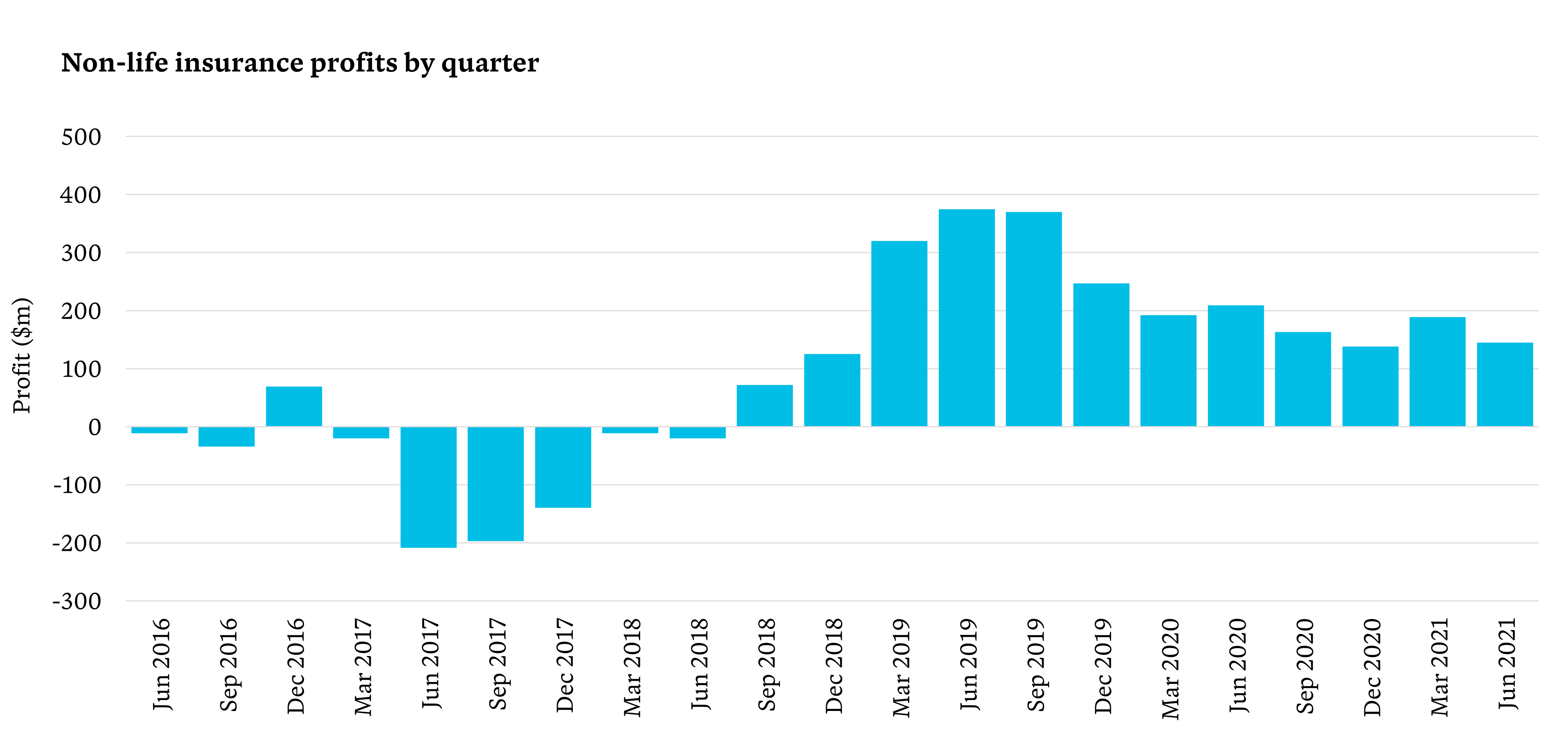
    Floods, hailstorms, tornadoes and the Lake Ohau fire, which destroyed 48 homes, caused insurers to take a profitability hit in FY2021. According to the Insurance Council of New Zealand natural disaster list, there were nine major events across Aotearoa estimated at $213 million in total losses. Despite these figures, quarterly data from the Reserve Bank of New Zealand (RBNZ) shows that although the level of profits have declined, general insurers remained profitable over the past year.

    This continued profitability of insurers, even with an increase in the number of natural disasters, indicates that past rate increases have resulted in insurers having adequate pricing and reinsurance programs. However, further premium rate increases are likely in the country due to increasing reinsurance rates, with the New Zealand general insurance market covered by a few reinsurers able to pick and choose their exposures. This is in line with hardening premium rates internationally, as consumer demand remains high, while insurer supply and appetite dwindle.
    Source: RBNZ Quarterly Insurance Financial Performance

    Greater focus on flood risk

    Weather-related events have also continued into the second half of 2021, with heavy rain in mid-July causing significant flooding across the country, but with the West Coast being the hardest hit. The current costs for these floods are in excess of $120 million. West Auckland also experienced severe flooding in August 2021.

    These events highlight that flood risk is significant for New Zealand general insurance. To date, the introduction of risk-based pricing in the New Zealand market has predominantly focused on earthquake risks. This is due to the higher risk of large losses posed by earthquakes and the availability of sophisticated insurance risk models for earthquakes. Historically, flood models that cover all New Zealand risks have not been available.

    In May 2021, RMS, an international catastrophe risk-modelling firm, launched a flood model for New Zealand. In June 2021, financial and data services company CoreLogic updated its flood models that were launched in 2020 to providing 100 per cent coverage and greater detail, down to property level. As the sophistication of risk modelling increases, insurers will be able to adjust their pricing and underwriting to reflect a wider range of risks.

    When risk-based pricing gets sophisticated

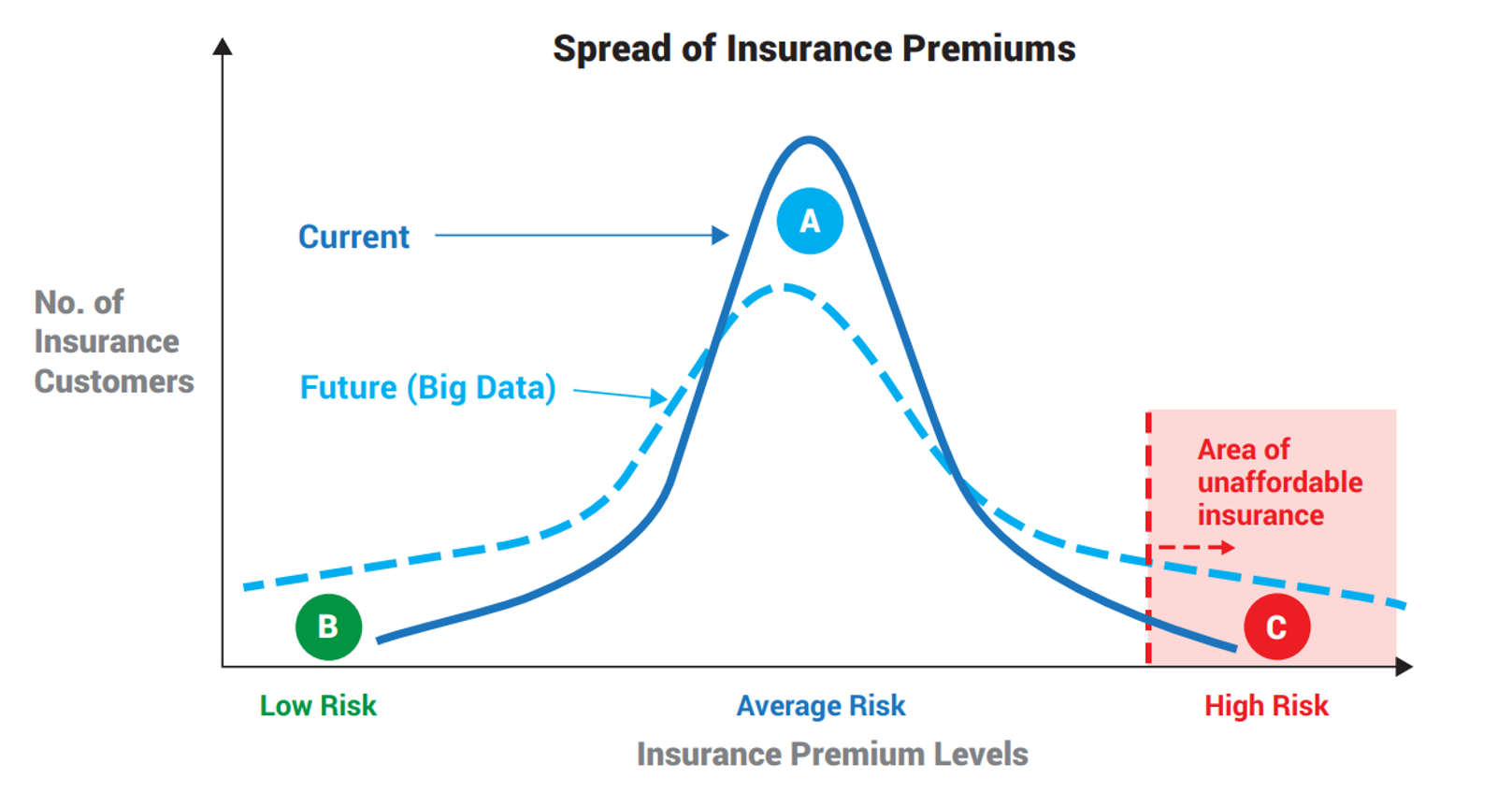
    This broadening of risk-based pricing will result in a wider spread of insurance premiums, which means some customers will see a decrease in their premiums and others will see their premiums increase. Those customers that experience the largest premium increases may potentially end up being unable to afford to continue to insure their property.

    When increases in risk-pricing results in homes becoming unaffordable, this can result in pressure for the Government to intervene in the insurance market. An example of this is the reinsurance pool for North Australian cyclones and floods, which was announced by the Australian Government in May. With the exception of the Earthquake Commission (EQC), we are yet to see any similar interventions in New Zealand.
    Source: The Impact of Big Data on the Future of Insurance, Actuaries Institute of Australia

    Warning bells for coastal retreats

    One future risk that the Government is considering is coastal erosion. As sea levels rise due to global warming, several coastal properties are expected to become uninsurable. A paper published through the Government’s Deep South Challenge initiative estimated that up to 10,000 homes may be uninsurable by 2050. Minister for Climate Change James Shaw has said the Government will be looking at the options to tackle sea-level rise as part of the Climate Change Adaptation Act (CCA), one of the three acts government is proposing to replace the Resource Management Act.

    One of the potential options in response to rising sea levels is managed retreat, where coastal properties are abandoned, and people are resettled in new properties. James Shaw has said the Government hasn’t made any policy decisions yet. However, the Ministry for the Environment’s website says that the CAA will “address the complex and technical issues associated with managed retreat and funding and financing adaptation”. This suggests some form of managed retreat will be implemented. The Government will work closely with insurers and banks in the development of the CCA. There is currently no firm date for when the CCA will be implemented.

    Mandatory climate-related disclosures

    In the more immediate term, the Government has also announced the introduction of mandatory climate-related disclosures for large insurers. This requirement will apply to licensed insurers with annual premiums of more than $250 million or assets of more than $1 billion. This definition will capture the nine largest general insurers in New Zealand, along with the two largest health insurers. However, insurers who are not captured by the requirements could potentially self-adopt the requirements as well.

    At the moment, there are no requirements for reporting on climate change impacts. The Productivity Commission noted in its Low Emissions Economy report that this lack of information has resulted in “ongoing and systemic overvaluation of emissions-intensive activities”. One of the goals of the mandatory disclosures is “to ensure that the effects of climate change are routinely considered in business, investment, lending and insurance underwriting decisions”.

    Future risk: government is considering coastal erosion, as sea levels rise with global warming

    The requirements of the mandatory disclosure are being developed by the External Reporting Board (XRB). The standards will be based on the 2017 recommendations from the Task Force on Climate-related Financial Disclosures of the Financial Stability Board. These recommendations have four key themes:

    • Governance of climate-related risks
    • The impact that climate-related risks have on an organisation’s strategy and resilience
    • The risk-management processes an organisation has for identifying and managing climate-related risks
    • The metrics and targets are used to assess and manage climate-related risks.

    The XRB are currently consulting on the proposed governance and risk management sections of the proposed new standard. Further consultation on the strategy and metrics and targets sections of the standard will be held in March 2022. A final consultation on the formal exposure draft will then be held in July 2022, with the final standard expected to be issued in December 2022.

    New standard bearers

    In July, the RBNZ published the draft Interim Solvency Standards (ISS), as part of its solvency standards review announced in October 2020. The review of the solvency standards is seeking to respond to several developments that have emerged since the standards were first introduced in 2014. Two of the key developments are the introduction of new insurance accounting standards and the IMF review of the New Zealand financial sector, which recommended closer adherence to the International Association of Insurance Supervisors’ Insurance Core Principles.

    The draft ISS combines the five current solvency standards into a single standard. Combining the standards has created some definitional issues between general and life insurance contracts. The definitions outlined in the ISS mean that New Zealand general insurance products that have terms of more than one year, such as extended warranty insurances which usually have terms of 3-5 years, are considered long-term insurance and so would be subject to solvency standard requirements from the old life insurance standard.

    Waiting for change

    At this stage, there have been no changes to the existing calibration factors that are used to calculate the minimum solvency capital for general insurers. The ISS was not intended to alter capital requirements. The RBNZ will be undertaking a recalibration of the capital changes in stage two of the solvency standard review, which is expected to be done in 2022 and 2023. However, the standard includes a new capital charge for operational risk, which will impact the regulatory solvency position for general insurers.

    Freeze frame: mandatory climate-related disclosures will capture the nine largest general insurers

    The operational risk charge is calculated as three per cent of an insurer’s gross premium (or their claims liabilities, if these are higher), plus an additional charge for insurers who have annual premium growth that exceeds 20 per cent. For the 10 largest general insurers who comply with New Zealand solvency requirements, applying this charge to their last annual accounts would result in a 36 per cent decrease in their combined solvency ratios. This may suggest insurers could look to increase their capital levels, potentially by increasing the retention of any future profits.

    The RBNZ is considering feedback from the submissions on the draft ISS and is aiming to publish a revised ISS by 1 October 2022. The draft ISS was originally due to come into force on 1 January 2022, but has been deferred until 1 January 2023.

    Conduct bill on the horizon

    The other piece of regulation on the horizon for New Zealand general insurance is the Financial Markets (Conduct of Institutions) Amendment Bill (CoFI), which will amend the Financial Markets Conduct Act 2013. The CoFI bill will require insurers to have a fair conduct program to ensure they treat customers fairly. It will also regulate sales incentives, with incentive targets likely to be banned. The CoFI bill is awaiting its second reading in parliament and is expected to pass into law in 2023.

    In July, the Financial Markets Authority (FMA), which will be the regulator of insurers’ fair conduct programs under the CoFI bill, issued a report on how general insurers are responding to conduct risk. In particular, the report looked at whether general insurers had completed a set of specific FMA-requested tasks, relating to their conduct risk, commissions and incentives. The report found only two insurers had completed the tasks to the FMA’s satisfaction. This suggests general insurers will still have some work to do in meeting their regulatory requirements under CoFI once it is enacted.

    Under pressure: RBNZ stress testing found insurers would be most affected by a reinsurance shock

    Stress-test first reveals reinsurance weak link

    The RBNZ recently released its findings of the first stress test it has undertaken on general insurers. It put the five largest insurers to the test covering three scenarios: a reinsurance market stress scenario, an economic downturn scenario and a severe weather events scenario.

    The stress testing found insurers would be most impacted by the reinsurance market stress scenario. Under this scenario, it is assumed that due to catastrophic global events the global reinsurance market experiences a shock. The result of this shock is a 10 per cent reduction in reinsurance capacity, together with increasing reinsurance premiums and credit rating downgrades for reinsurers. Under this scenario, the New Zealand general insurance industry would fail the RBNZ’s regulatory solvency requirements if no mitigating actions were undertaken by insurers.

    The reason for this result is the RBNZ’s requirement for general insurers to obtain reinsurance cover for expected losses from a 1:1000 earthquake event. For all other risks, reinsurance is needed only for expected losses from a 1:250-year event. This means that insurers who underwrite earthquake risks are reliant on reinsurers providing high levels of cover.

    Tricky choice – cover the cost or exclude the risk

    A reduction in global reinsurance capacity would mean that insurers would need to either raise capital to cover the reduced reinsurance capacity or reduce their exposure to earthquake risks. The RBNZ stress-testing results show that the additional capital that would need to be raised by the five largest insurers is $1.9 billion for a 10 per cent reduction in reinsurance capacity. Under this scenario, one potential mitigating option for insurers would be to exclude earthquake cover for property risks or provide it as a highly priced optional extra, as is the case in California. This scenario could lead to public pressure on the Government to carry all earthquake risks through the EQC, including commercial risks, which are currently not covered.

    Future perspective: the NZ insurance landscape is well placed to navigate the challenges ahead

    Earthquake Commission has an eye for fairness

    Prior to the results of the RBNZ stress testing, the Government has announced it will be increasing the EQC cap for domestic properties, from the current $150,000 to $300,000 (plus GST). This increase will mean that the maximum EQC levies increase from $345 to $552. The change will come into effect for policies written from 1 October 2022. The Government has said it expects to see insurance premiums reduce, and that if insurers’ pricing does not behave as expected, then it is open to considering options, such as a competition study.

    The increase in the EQC cap will reduce the private insurance industry’s exposure to domestic earthquake risks. This would reduce the magnitude of the reinsurance market test highlighted by the RBNZ stress testing, although it would be unlikely to change the underlying result. However, the majority of the domestic market is insured by either IAG or Suncorp. Both insurers have reinsurance programs covering their combined New Zealand and Australian risks. This means the change in the risk exposure for their New Zealand risks may not necessarily result in a reduction in their overall reinsurance costs. Internationally, reinsurance rates are also expected to increase over the next year. This is due to higher-than-usual numbers of natural catastrophe losses globally, as well as losses related to the COVID-19 pandemic.

    Given these factors and the Government messaging, we expect the pricing of domestic insurance policies for the next few years to be under a higher-than-usual level of scrutiny. This, combined with the expected introduction of the CoFI legislation, will require insurers to provide more evidence they are treating customers fairly.

    The future is agile

    A wave of change is bearing down on the New Zealand general insurance industry and insurers will need to respond to several regulatory changes. These changes will increase the compliance costs for insurers. At the same time, insurance affordability will continue to remain a key issue. The insurance industry is well placed to respond to these changes, but will need to keep in mind the importance of a flexible approach in this fast-changing environment.